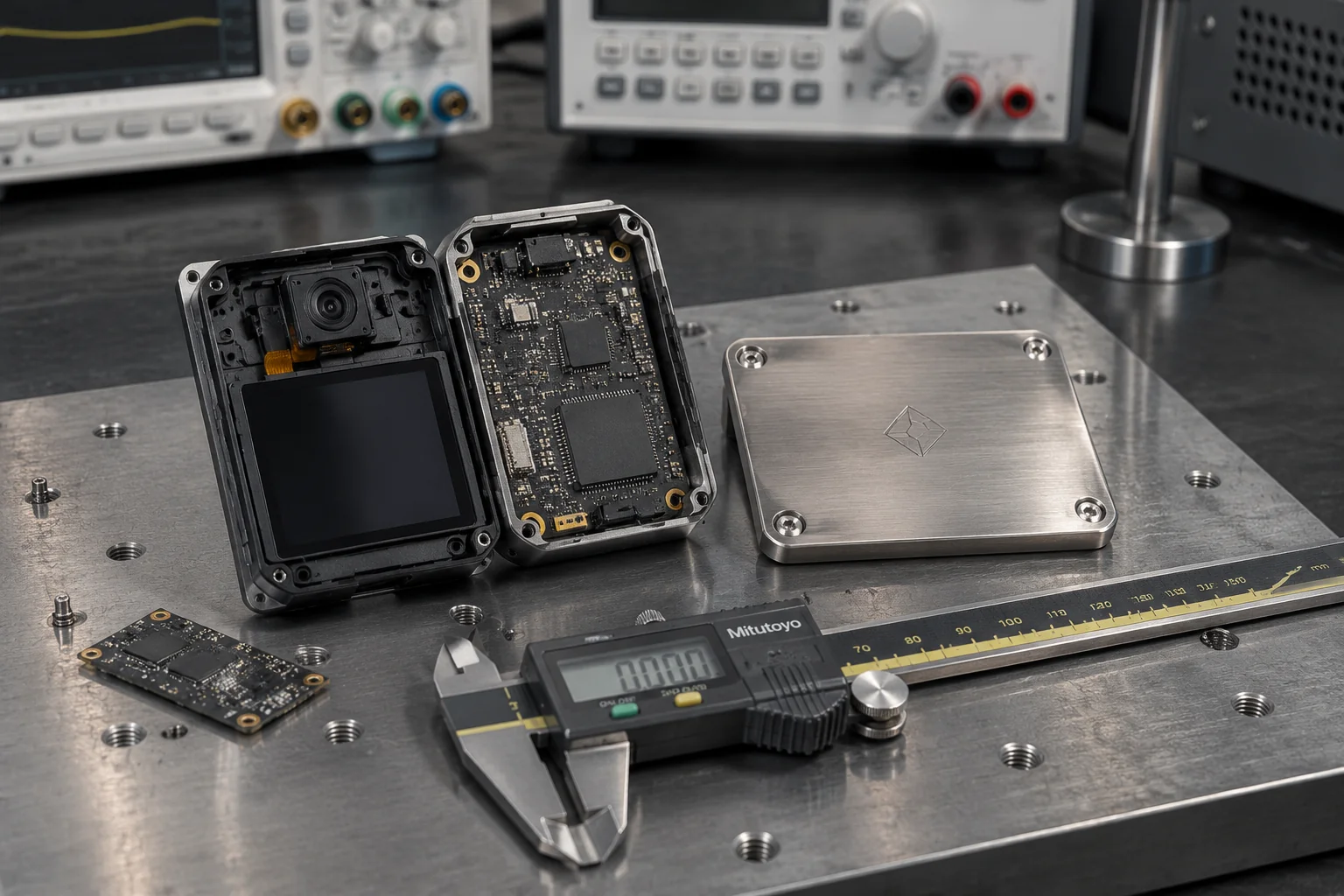
Two Threat Planes of Self-Custody: Silicon Key Extraction vs Transport De-Anonymization
Retail wallet comparisons treat hardware security and financial privacy as separate product categories. In adversarial practice, both fail along coupled trust boundaries. A key-extraction defense protects secp256k1 and Ed25519 private scalars against host malware, malicious browser extensions, and physical voltage or electromagnetic fault injection (FI). A transport defense prevents the watch-only wallet coordinator from surrendering your residential IP address, TLS JA4 client fingerprint, extended public key (xpub / zpub), and full multi-account portfolio graph to centralized infrastructure conglomerates.
Between 2023 and 2026, two structural failures reshaped self-custody engineering. First, the industry learned from both the 2023 cloud-shard recovery controversy and the February 2025 $1.46B Bybit Safe multisig UI compromise that an impenetrable Secure Element chip cannot save a treasury if the firmware allows opaque cloud key-export paths or renders raw hexadecimal digests instead of human-verifiable contract parameters. Second, the consolidation of default wallet RPC endpoints (Infura / Consensys, Alchemy, QuickNode, and hosted Electrum clusters) turned passive balance checks into real-time identity graphs that feed commercial wallet tracker platforms and cross-reference against commercial mobile location and KYC data brokers.
Silicon Trust Models: Auditable Open Secure Elements vs NDA Banking Chips
Hardware wallets defend against physical possession attacks: an adversary who steals your signing device in a hotel room, border inspection, or home burglary and attaches microprobes, laser fault-injection benches, or STM32 voltage-glitching rigs (chip.fail) to dump flash memory before brute-forcing the PIN. For a decade, wallet engineers faced an uncomfortable binary choice between open-source general-purpose microcontrollers (MCUs) vulnerable to physical glitching and closed-source banking Secure Elements (SEs) locked behind sweeping semiconductor non-disclosure agreements (NDAs).
Four distinct silicon architectures now compete across 2026 production hardware signers:
- Auditable Open-Architecture Secure Element + General MCU (
Trezor Safe 7withTROPIC01): Developed by Tropic Square,TROPIC01breaks the legacy semiconductor NDA model by publishing register-level datasheets,RISC-Vcryptographic coprocessor specifications, physical unclonable function (PUF) key-wrapping logic, and full white-box penetration test reports from independent side-channel laboratories. Paired with an open-source application MCU and a dual-chip PIN-stretching protocol, neither chip holds sufficient state to unwrap the seed independently, and external researchers can verify firmware reproducibility down to silicon bus traffic. - Dual-Vendor NDA Secure Elements + Open Application MCU (
Coldcard Q/Mk4,BitBox02): Rather than executing wallet parsing logic inside a closed NDA chip,Coldcard Qpairs an open-sourceSTM32microcontroller with two Secure Elements from competing semiconductor manufacturers (Microchip ATECC608BandMaxim DS28C36B). Secret material is cryptographically split and chained across all three chips viaHMAC-SHA256challenge-response slots: even if one chip vendor harbors an undocumented ROM flaw or state-compelled backdoor, it never sees the plaintextBIP-39master secret or signing nonce.BitBox02similarly uses itsATECC608Bstrictly as a monotonic counter and anti-brute-force key-stretching oracle while executing open-source C/Rust signing code on the host MCU. - Monolithic NDA Secure Element Execution (
Ledger Flex/Stax/Nano XonST33K1M5): Ledger executes its proprietaryBOLOSoperating system and wallet applets directly inside a Common CriteriaEAL6+STMicroelectronics ST33smartcard chip driving the secure E-Ink touchscreen directly. Physical glitch resistance and direct secure-display wiring are industry-leading, eliminating MCU-to-screen man-in-the-middle bus tampering. However, becauseBOLOSkernel code andST33masks remain under NDA, users must place institutional trust in Ledger's internalDonjonteam and firmware signing keys: a trust boundary strained when optional cloud shard export primitives (Ledger Recover) proved firmware updates could theoretically route seed shares out of the Secure Element if approved on-device. - Stateless / Blind-Oracle Hardware Architecture (
SeedSigner,Krux,Blockstream Jade): Stateless DIY signers (SeedSigneron Raspberry Pi Zero1.3with Wi-Fi/Bluetooth silicon physically absent) store zero persistent flash secrets; keys exist solely in volatileSRAMfrom QR/dice input until power removal, completely neutralizing stolen-device physical extraction at the cost of requiring physical seed/QR custody for every spend.Blockstream Jadeavoids NDA chips on persistent wallets by encrypting the seed on flash and requiring a blindECDHPIN-server handshake (self-hostable over Tor) to unwrap the decryption scalar.
Air-Gapped Transport (BC-UR 2.0 QR & BIP-370 PSBTv2) vs USB Attack Surfaces
Connecting a hardware wallet over USB-HID or WebUSB exposes bidirectional protocol parsers (libusb, descriptor tables, and vendor framing layers) directly to a potentially compromised host kernel. Air-gapped transports narrow this physical channel to unidirectional or strictly bounded payloads:
- Animated
BC-UR 2.0Fountain-Code QR (ERC-4527/ Blockchain Commons Uniform Resources): Used byColdcard Q,Keystone 3 Pro,SeedSigner,Krux, andTrezor Safe 7,UR 2.0encodes arbitrarily large BitcoinPSBTs or EthereumEIP-712payloads acrossCBOR-serializedLuby Transformrateless fountain frames. Because optical cameras operate at low kilobyte bandwidth and decode explicitly structuredcrypto-psbtoreth-sign-requestschemas, USB stack exploits are eliminated, and every byte crossing the air-gap can be audited by pointing a second offline camera at the animated QR stream before transmitting. BIP-174/BIP-370(PSBTv2) on MicroSD & NFC: Partially Signed Bitcoin Transactions standardize multi-party construction, UTXO witness verification (witness_utxo+ fullnon_witness_utxoto prevent SegWit fee-overpayment attacks), and output change-path validation (BIP-32derivation paths +BIP-380output script descriptors). A properly implementedPSBTsigner independently computes the exact miner fee and verifies that any change output belongs to the user's own registered multisig descriptor before releasing aSchnorr(BIP-340) orECDSAsignature.- Covert Exfiltration (Nonce Kleptography /
Anti-Exfil): Sophisticated supply-chain attackers who compromise signing firmware on an air-gapped device do not need Wi-Fi to steal your private key; they can bias theECDSA/Schnorrephemeral noncekacross two or three valid signed transactions so an observer watching the public blockchain algebraically recovers the private key (d). Protocols such asPay-to-Contractdeterministic host-device nonce commitments (Anti-Exfil, supported inBitBox02andJade) require the host coordinator to contribute verifiable randomness tokand verify a zero-knowledge commitment, making covert nonce-channel key exfiltration mathematically impossible without aborting signing.
Key-Management Topologies: BIP-39 + Passphrase vs SLIP-39 vs Miniscript Multisig vs MPC-TSS
Single-seed storage creates a catastrophic conflict between theft risk (an attacker finds your stamped titanium plate and sweeps everything immediately) and loss risk (a house fire or estate incapacity destroys the sole copy). Engineers mitigate single-point failure across four cryptographic primitives:
BIP-39+PBKDF2-HMAC-SHA512Passphrase ("25th Word"): Appending a high-entropy passphrase (>= 60 bits, stored separately from the 24-word mnemonic) derives an entirely distinctBIP-32root seed via2,048rounds ofHMAC-SHA512. Funding a low-balance decoy wallet on the bare 24-word seed provides plausible duress protection against physical coercion, provided the main vault'sxpubis never left cached in plaintext on the victim's phone or laptop (Sparrow/Nunchukduress-PIN wipe).SLIP-0039Shamir's Secret Sharing overGF(2^8): Standardized by SatoshiLabs,SLIP-39replaces brittle ad-hoc "seed splitting" (which catastrophically leaks entropy bits!) with information-theoretically secure Lagrange polynomial interpolation overGF(256)(x^8 + x^4 + x^3 + x + 1), supporting hierarchical two-level thresholds (for example, a 2-of-3 family-plus-attorney group quorum where the family group itself requires 3-of-5 shares). Its primary trade-off is recovery convergence: during vault restoration,kshares must be entered into a single hardware device, temporarily reconstituting a single point of silicon trust.- On-Chain
M-of-NMultisig & BitcoinMiniscript(BIP-379/Safe): Native BitcoinP2WSHorTaproot(BIP-341/342script-path orMuSig2BIP-327key-path) multisig and EVMSafesmart accounts distribute keys across heterogeneous hardware vendors (for example,1 Coldcard Q+1 Trezor Safe 7+1 BitBox02in a2-of-3quorum). No single firmware backdoor, supply-chain interdiction, or physical burglary compromises funds. WithMiniscripttimelocks (OP_CHECKSEQUENCEVERIFY), vaults can enforce decaying inheritance paths (for instance,2-of-3primary keys normally, decaying to1-of-3 + estate keyafter52,560blocks /~1 yearof UTXO inactivity). Users must back up bothkseeds and the output script descriptor (BSMSBIP-129) to reconstruct change addresses! - Threshold Signature Schemes (
MPC-TSS:FROSTRFC 9591&CGGMP21): Multi-Party Computation generates distributed key shares via Distributed Key Generation (DKG) and produces a standard single-keySchnorrorECDSAsignature via interactive rounds without ever reconstructing the private key in one memory space. While chain-agnostic and fee-minimizing on chains lacking native multisig, retail MPC apps frequently rely on closed-source vendor mobile SDKs and cloud co-signers rather than heterogeneous air-gapped hardware signers, introducing availability lock-in if the vendor's TSS coordinator goes offline without an offline recovery kit.
You can model exact fault-tolerance matrices across fire, burglary, coercion, and vendor subversion, or split synthetic entropy over GF(256), inside our offline Seed Entropy & SLIP-39 Multisig Lab.
Clear Signing (ERC-7730) vs EVM Calldata Blind-Signing Traps
Hardware wallets originally engineered for Bitcoin's transparent input/output value model struggled when confronted with arbitrary EVM smart contract calldata (data field). Whenever an ABI definition was missing from device flash, firmware fell back to displaying a truncated 32-byte keccak256 message or transaction hash (Blind Signing). As reconstructed in our forensic post-mortems on Bybit ($1.46B), EIP-7702 Sweeper Delegations, and Ledger Connect Kit, attackers routinely inject malicious web JavaScript that displays a benign swap on your 27-inch laptop monitor while feeding an execTransaction(operation=1 DELEGATECALL), Permit2 batch allowance, or 0x04 SET_CODE delegation tuple to the hardware signer.
ERC-7730 (Structured Clear Signing Format) addresses this gap via cryptographically signed JSON descriptor files maintained in open registries (Ledger Clear Signing Registry, Keystone, Trezor, and Rabby). An ERC-7730 descriptor maps raw ABI byte offsets and EIP-712 typed-data fields onto unambiguous human intent screens (displaying exact token contract symbols, decimal-scaled recipient amounts, spender addresses, and operation flags directly on the hardware screen). For high-value multisig and DeFi operations where hardware ERC-7730 descriptors are unavailable, signers must copy raw unsigned hex or EIP-712 JSON into an independent offline decoder such as DT.gl's Calldata & Blind-Signing Risk Visualizer and compare the independently computed domainSeparator and safeTxHash character-by-character on the hardware screen.
The Silent De-Anonymizer: Wallet JSON-RPC Batching & Network Metadata Leaks
Even when a user executes flawless offline key generation on an open-silicon air-gapped signer, 90%+ of self-custody setups surrender complete multi-account identity correlation the instant their watch-only desktop or browser wallet opens.
Four specific metadata vectors leak inside standard wallet companion apps:
- Multi-Account JSON-RPC Batch Correlation: Creating "Account 2" inside MetaMask, Rabby, Phantom, or Ledger Live to hold non-KYC assets provides zero network separation from "Account 1" (funded from Coinbase). On startup and every block (
12son Ethereum), the wallet querieseth_getBalance,eth_getTransactionCount, andMulticall3token balances for every imported account simultaneously over the sameHTTPSsocket and residential IP. - Public Electrum
blockchain.scripthash.subscribeClustering: When a Bitcoin desktop or mobile wallet connects to a public Electrum server without a personal node, it subscribes toSHA-256script hashes for20+receive and change addresses across theBIP-84/BIP-86gap limit in one session. Chain-surveillance firms operate high-uptime public Electrum servers specifically to harvest these wallet-level address clusters without needing heuristicCommon-Input-Ownershipguesses. - Token Auto-Discovery, NFT Media Gateways & Fiat Pricing Telemetry: Even if you point a browser wallet's primary EVM RPC setting to a self-hosted
RethorErigonnode, secondary background services (automatic ERC-20 spam/token discovery APIs, IPFS NFT thumbnail gateways likeipfs.ioandcloudflare-ipfs, ENS avatar resolvers, and fiat USD ticker endpoints) often continue phoning home to vendor cloud APIs with your active address list! - First-Seen Mempool Broadcast Origin: Broadcasting a freshly signed transaction directly from your residential ISP or unshielded VPN without
Torcircuit isolation orDandelion++stem-phase routing (Monero/Feather) allows mempool observer nodes deployed across cloud regions to triangulate the originating peer IP within milliseconds. Combine wallet RPC hardening with Encrypted DNS,ECH, and network transport isolation and hardened browser profile separation (LibreWolf/Mullvad Browser/GrapheneOSuser profiles).
The 2026 Crypto Wallet Silicon & RPC Privacy Matrix
DT.gl grades twelve widely deployed hardware signers and desktop/mobile wallet coordinators across silicon auditability, air-gapped signing verification, EVM/Bitcoin clear signing, default network telemetry, and sovereign node integration:
| Wallet / Signer | Class & Chains | Silicon / Key Storage Model | Air-Gap & Clear Signing | Default Network / RPC Leak Profile | Sovereign Node & Tor Grade |
|---|---|---|---|---|---|
| Trezor Safe 7 | Hardware (BTC + Multi) | Open SE (TROPIC01) + MCU (Open FW) | BC-UR 2.0 QR / BT / USB + ERC-7730 | Trezor Suite SatoshiLabs backends unless custom node | A (Native Tor toggle + custom Electrum/RPC) |
| Coldcard Q | Hardware (BTC-Only) | Dual NDA SE (ATECC608B + DS28C36) + Open MCU | Full Air-Gap (BC-UR QR, MicroSD PSBTv2, NFC) | Zero (Device has zero Wi-Fi/BT; pairs w/ Sparrow) | A+ (100% offline; full Miniscript & Dice UX) |
| BitBox02 Nova | Hardware (BTC-Only / Multi) | Open MCU + ATECC608B Counter + Anti-Exfil | USB-C + On-device touch slider + Anti-Exfil nonce | BitBoxApp default Electrum servers unless overridden | A (Tor SOCKS5 + personal Electrum + Anti-Exfil) |
| Blockstream Jade Plus | Hardware (BTC + Liquid) | Encrypted Flash + Blind ECDH PIN Oracle (Zero NDA SE) | Air-Gap QR (BC-UR / CompactSeedQR) + USB | Blockstream blind oracle + Green servers by default | A- (Self-hostable blind oracle + Sparrow Tor) |
| SeedSigner (DIY) | Stateless Hardware (BTC) | Volatile RAM Only (RPi Zero 1.3; zero flash state) | 100% Optical QR Air-Gap + Camera Dice Verify | Zero (No persistent memory, no radio silicon) | A+ (Requires physical seed/SeedQR OPSEC) |
| Keystone 3 Pro | Hardware (BTC + EVM) | Triple NDA SE (Microchip + Maxim) + Open App FW | Air-Gap QR (BC-UR 2.0) + ABI / ERC-7730 | Depends entirely on paired host (Rabby / Sparrow) | A- (Strong EVM air-gap; closed SE boot ROMs) |
| Ledger Flex / Stax | Hardware (Multi-Chain) | Monolithic NDA ST33K1M5 EAL6+ (Closed BOLOS) | Direct SE E-Ink + Leading ERC-7730 Clear Registry | High in Ledger Live (analytics + hosted RPCs) | B- (Use strictly via Sparrow/Rabby, skip Ledger Live) |
| Sparrow Wallet | Desktop Coordinator (BTC) | Host Watch-Only or Encrypted Software Keystore | Full BIP-370 PSBTv2, Byte-level tx/UTXO inspector | Warns prominently in UI when on public Yellow mode | A+ (Built-in Tor, Bitcoin Core IPC/RPC, Fulcrum, PayJoin) |
| Feather Wallet | Desktop Coordinator (XMR) | Host Keystore + Ledger / Trezor Monero Support | Full subaddress, ring/FCMP++ & coin-control view | Zero IP leak (Routes traffic over Tor + Dandelion++) | A+ (Built-in Tor .onion nodes + local monerod) |
| Zashi (ECC) | Mobile Shielded (ZEC) | Mobile Secure Enclave / Keystore + Keystone QR | Shielded-by-default Orchard Halo 2 UX | Lightwalletd compact block scanning (metadata-padded) | A- (Mandatory shielding prevents transparent t-addr leaks) |
| Rabby Wallet | Browser / Desktop (EVM) | Browser Extension Keystore (Best paired w/ HW QR/USB) | Pre-exec EVM simulation + Approval risk engine | Moderate-High (Rabby backend simulation + price API) | B (Superior drainer defense; isolate browser profiles!) |
| MetaMask | Browser / Mobile (EVM) | Browser Extension Keystore + HW Signer Bridge | Basic EIP-712; relies on Snaps for simulation | High (Default Consensys/Infura batch RPC + token APIs) | C (Disable auto-detect & point to local Reth/Helios) |
For deep protocol-level privacy beyond wallet transport (covering Monero FCMP++, Zcash Orchard, 0xbow Privacy Pools, BIP-352 Silent Payments, ERC-5564 stealth addresses, and Boltzmann UTXO entropy), consult DT.gl's companion guide on On-Chain Privacy Protocols & Non-KYC P2P Architecture and test your UTXO/RPC footprint inside the Wallet RPC Leak & UTXO Exposure Auditor below.
Historical Citation Archive & 2026 Empirical Upgrades
Archival provenance note: Prior to May 2025, legacy editorial URLs on dt.gl published foundational reviews on Bitcoin monetary self-custody, non-standard mnemonic recovery, UTXO de-anonymization vectors, atomic swaps, and decentralized commerce cited by open-source communities and protocol newsletters. Each record below preserves the cited archival thesis alongside DT.gl's 2026 cryptographic and OPSEC verification benchmarks.
Foundational Cypherpunk & Bitcoin Self-Custody Canon
Cited on independent self-reliance and digital autonomy directories (including parasurv.neocities.org) as a curated technical reading syllabus spanning Satoshi Nakamoto's 2008 whitepaper, Nick Szabo's Bit Gold and smart-contract essays, Adam Back's Hashcash proof-of-work specification, and Andreas Antonopoulos's Mastering Bitcoin key-derivation chapters. The original bibliography emphasized verifying consensus rules and elliptic-curve key ownership from primary cryptographic specifications rather than custodial exchange tutorials.
2026 Technical Upgrade: Modern self-custody engineering extends that foundational canon with BIP-340/341/342 (Schnorr signatures and Taproot), BIP-379 (Miniscript composable spending policies and timelock inheritance), BIP-327 (MuSig2 multi-signatures indistinguishable from single-key spends on-chain), BIP-352 (Silent Payments static-address privacy), and BIP-360 post-quantum hash-based migration proposals alongside NIST's finalized FIPS 203/204/205 standards.
Adversarial Critique of Transparent-Ledger Fungibility & Base-Layer Trade-Offs
Referenced across seven independent crypto-economics domains (including bitcoin.com.ua), this archival essay examined the strongest structural criticisms leveled against Bitcoin's base layer: transparent UTXO graph surveillance (lack of native base-layer sender/amount confidentiality), fee-market volatility pricing out small self-custodial UTXOs during high-congestion epochs, mining pool Stratum centralization, and wrapped/ETF custodial re-hypothecation recreating fractional banking opacity.
2026 Technical Upgrade: Rather than dismissing base-layer fungibility critiques, 2026 engineering addresses them explicitly: Stratum V2 job negotiation returns block-template selection to individual miners; economical UTXO consolidation (> 0.01 BTC threshold per UTXO) prevents dust-locking during fee spikes; and users requiring cryptographic base-layer amount/graph hiding pair Bitcoin cold storage with BIP-352 Silent Payments, BIP-77 Async PayJoin v2, or atomic swaps into Monero FCMP++.
Zero-Middleman Decentralized Commerce (DeCommerce) & Mutual-Deposit Escrow
Cited by the Particl Project (particl.news) regarding the architecture of peer-to-peer encrypted marketplaces that eliminate centralized e-commerce rent extraction and buyer/seller identity harvesting. Traditional marketplaces collect residential shipping addresses, tax IDs, purchase histories, and payment cards inside centralized honeypots. Decentralized commerce replaces platform adjudication with game-theoretic Mutually Assured Destruction (MAD) two-party escrow smart contracts over encrypted P2P message transport (SMSG / Tor) settled in confidential RingCT or Taproot outputs.
2026 Technical Upgrade: Private P2P commerce OPSEC in 2026 integrates end-to-end encrypted non-phone-number messaging (SimpleX Chat or Signal username-only), client-side image/invoice metadata stripping (EXIF/PDF Sanitizer), postal PMB/locker delivery separation from home addresses, and confidential settlement rails (Particl BasicSwap, Monero, or Zcash Orchard).
Cryptographic Asymmetry: Cost of Verification vs Cost of Coercion
Cited on independent literary and technical blogs (including nozaki-sekizai.com), this archival analysis evaluated the 1997 Davidson and Rees-Mogg thesis (that public-key cryptography shifts the defensive advantage from centralized territorial institutions toward individuals capable of securing asymmetric keys) against twenty-first-century state and commercial surveillance realities. While 256-bit elliptic-curve math remains immune to brute force, real-world coercion targets the human and physical perimeter rather than secp256k1 discrete logarithms.
2026 Technical Upgrade: Practical sovereignty requires eliminating single-human coercion points ($5 wrench attacks): distributing signing authority across geographically separated 2-of-3 or 3-of-5 Miniscript timelocked hardware quorums, enforcing duress decoy passphrases, and purging residential addresses from people-search data brokers and leaked KYC databases.
Trustless Cross-Chain Atomic Swaps vs Centralized Custodial Bridges
Referenced in federated #atomicswaps engineering discussions (home.social), this review contrasted true cryptographic atomic swaps against custodial exchange order books and multisig/validator token bridges. Whereas wrapped-asset bridges lock native coins inside honeypot smart contracts (accounting for over $2.8 billion in losses across Ronin, Wormhole, Nomad, and Multichain), atomic swaps enforce trustless cross-chain settlement via Hash Time-Locked Contracts (HTLCs) or Point Time-Locked Contracts (PTLCs) and adaptor signatures.
2026 Technical Upgrade: Because Monero lacks a Bitcoin-style scripting language for SHA-256 HTLC preimages, modern BTC-XMR atomic swaps (COMIT / UnstoppableSwap / Eigenwallet / BasicSwap DEX) utilize cross-curve discrete-logarithm equivalence (DLEQ) proofs and secp256k1/Ed25519 adaptor signatures with refund timelocks, leaving zero shared hash preimage on-chain to correlate the Bitcoin and Monero legs!
Forensic Recovery of Legacy Non-BIP-39 (15/17/19/21-Word) Mnemonic Encodings
Preserved from the Wayback self-custody engineering archive, this guide solved one of early Bitcoin's most distressing user traps: legacy Blockchain.info (v1/v2/v3 wallet identifier/password mnemonics), Electrum versioned seeds, and AEZEED (LND Lightning) phrases that fail standard BIP-39 SHA-256 checksum validation. Users pasting legacy 15-, 17-, 19-, or 21-word dictionary encodings into modern BIP-39 wallets received Invalid Checksum errors, and tragically fell prey to malicious online "mnemonic fixer" websites that stole their wallets.
2026 Technical Upgrade: Legacy seed conversion (Blockchain.info dictionary-to-hex password decoding, BIP-44 vs BIP-49 vs BIP-84 derivation path scanning, or Electrum HMAC-SHA512("Seed version") derivation) must exclusively be executed inside an air-gapped Linux live environment (Tails with networking disabled at boot) before immediately sweeping recovered funds to a fresh hardware-generated BIP-39 / SLIP-39 vault.
UTXO Dusting, Change-Output Fingerprinting & Boltzmann Graph Heuristics
Preserved from the historical UTXO anti-tracking archive, this technical brief analyzed how blockchain analytics engines break naive address rotation without needing address reuse: (1) Common-Input-Ownership Heuristic (CIOH) clustering every UTXO co-spent in a multi-input transaction; (2) Forced Dusting (546 to 1,000 sat poison outputs) hoping an unhardened wallet's automatic coin-selection algorithm sweeps the dust alongside high-value cold UTXOs; and (3) Wallet Change-Detection Fingerprinting via mixed script types (P2PKH spend to P2WPKH change), round-number payment outputs, nLockTime anti-fee-sniping flags, and BIP-69 lexicographical sorting signatures.
2026 Technical Upgrade: Defending UTXO privacy requires mandatory manual coin control (Freeze UTXO on unsolicited dust) in Sparrow Wallet, uniform P2TR (Taproot bc1p) script types across payment and change outputs, BIP-77 Async PayJoin v2 to break CIOH assumptions, and auditing transaction linkability matrices via our Boltzmann UTXO Entropy & Exposure Auditor.
Platform Merchant Telemetry Harvesting & Custodial Account Freezes
Cited via a live Ghost bookmark card on particl.news/imagine-being-screwed-over-like-this/, this investigation documented how centralized e-commerce conglomerates exploit internal merchant SKU velocity, supplier invoices, pricing elasticity, and customer return telemetry to launch competing private-label products while retaining unilateral custody power to freeze merchant working capital for 90+ days without judicial recourse.
2026 Technical Upgrade: Both merchant treasury resilience and customer anti-tracking depend on separating discovery from custodial payment choke points: self-hosted open-source storefronts (BTCPay Server deriving watch-only xpub or BIP-352 addresses with zero private keys on the web server, plus Monero view-key invoicing) eliminate platform payment freezes while keeping merchant customer databases completely off third-party SaaS telemetry clouds.
Frequently Verified Technical Questions
How does an open-architecture Secure Element like TROPIC01 differ from traditional EAL6+ banking chips?
Primary Reference: Tropic Square TROPIC01 Technical Architecture
Does using an air-gapped QR hardware wallet automatically make my crypto transactions private?
Primary Reference: BIP-174 / BIP-370 PSBT Coordinator Architecture
When is SLIP-39 Shamir backup preferable to on-chain 2-of-3 multisig?
Primary Reference: SLIP-0039 Specification
How do browser wallets leak links between ostensibly separate Ethereum accounts?
Primary Reference: Ethereum JSON-RPC Specification
What is the safest way to verify seed entropy when initializing a cold wallet?
Primary Reference: NIST SP 800-90B Entropy Assessment
Published: | Last Verified:
-
2026-11-11: Added TROPIC01 open-architecture Secure Element silicon audit criteria, updated the 12-wallet RPC privacy matrix, and integrated all eight archival self-custody and UTXO citation records. -
2026-08-19: Expanded ERC-7730 structured clear-signing coverage and BIP-370 PSBTv2 / BC-UR 2.0 animated QR air-gap verification benchmarks. -
2026-06-15: Initial DT.gl publication of the Self-Custody Silicon & Wallet RPC Anti-Tracking Engineering Reference.